Secondhand activity stayed firm across tankers and dry bulk this week, while a busy newbuilding slate and a quiet pre-monsoon recycling market framed the rest of the picture.
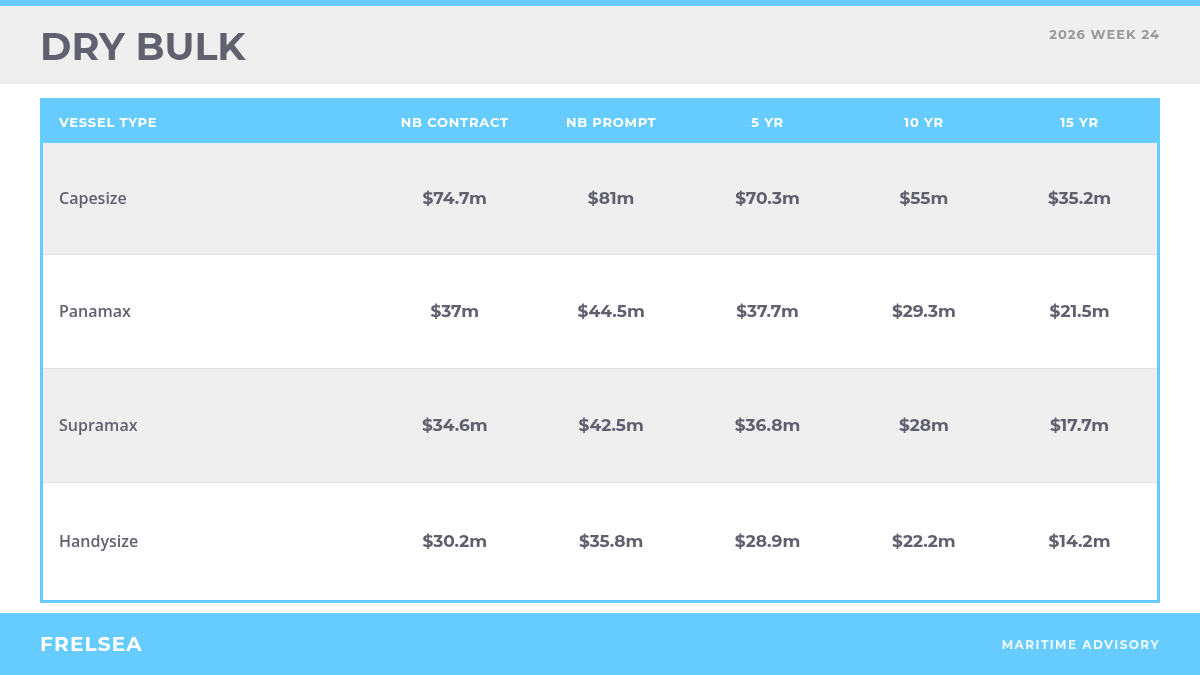
Tanker sale and purchase ran heavy, with the bulk of interest concentrated in the Aframax and LR2 sizes. A 2009-built coated Aframax of around 113,000 dwt sold at 53.5 million dollars, while a 2010-built coated unit of about 105,000 dwt changed hands at 44.5 million dollars basis an October cancelling. At the larger end, a modern scrubber-fitted LR2 resale delivering this year was committed at 90 million dollars, a level that underlines the premium buyers continue to pay for prompt, fully specified product tonnage.
The Suezmax segment produced the week’s standout deal, an en bloc sale of two 2023-built sisters of around 157,000 dwt at 110 million dollars each. Demand for young Suezmax tonnage remains strong, supported by a tight prompt market and limited resale availability. Older Panamax and LR1 product carriers also moved, with a pair of 2007 and 2008-built sisters of about 74,000 dwt sold together at 43.5 million dollars and a separate 2007-built LR1 at 22.5 million dollars.
Activity in the MR sector was steady rather than spectacular. A 2013-built MR2 of around 52,000 dwt achieved 32 million dollars, a 2015-built MR2 went to Greek buyers at 39.2 million dollars, and two MarineLINE-coated resales delivering this year were sold at 56 million dollars each. Newbuilding momentum in the crude segments showed no sign of cooling. Greek owners continued to dominate ordering, accounting for the bulk of VLCC and Suezmax contracts placed so far this year, with one operator securing four VLCCs against a long-term charter and another taking two Suezmaxes for 2029 delivery.
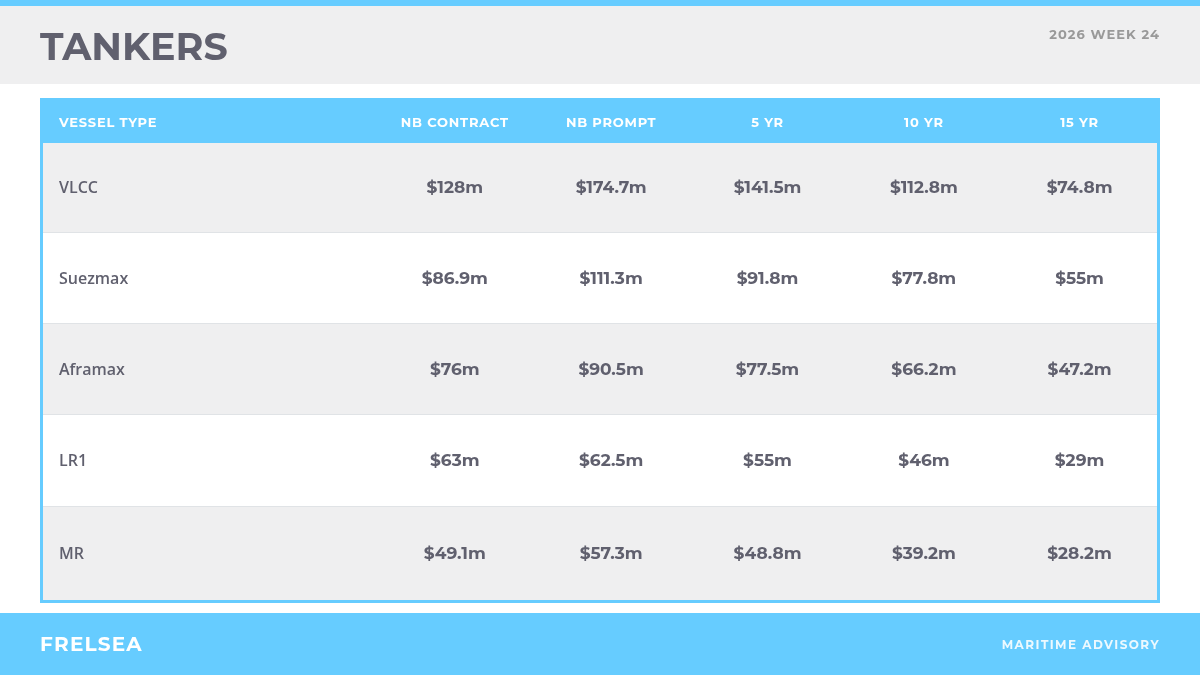
Dry bulk sales were spread evenly across the size range, with a balanced mix of vintage and modern tonnage trading. On the Capesize sector a 2007-built unit of around 177,000 dwt was committed to Chinese buyers at 25.5 million dollars. Two modern mini Capesize sisters of about 100,000 dwt, built in 2020 and 2021, went to Omani interests at 37.9 million dollars each, a firm price reflecting their efficient design and remaining survey position.
The Panamax and Kamsarmax sizes saw the heaviest turnover. A 2015-built Kamsarmax of around 82,000 dwt sold to Greek buyers at 26 million dollars with a period charter attached, while an older 2006-built unit fetched 12.9 million dollars and a 2011-built post-Panamax of about 93,000 dwt changed hands at 15 million dollars with a charter in place. A 2005-built Panamax of around 76,000 dwt went to Chinese buyers at 11.75 million dollars. Supramax demand held up well, with a 2013-built unit at 19 million dollars, a 2009-built vessel at 17.2 million dollars and a 2010-built sister sold to Greek buyers at the same level.
Handysize activity was the most active part of the dry market by deal count. A 2020-built unit of around 38,000 dwt sold at 28.5 million dollars, a 2016-built vessel at 19.4 million dollars, a 2009-built unit to Turkish buyers at 9 million dollars and a smaller 2012-built ship at 12.6 million dollars. Newbuilding interest in dry bulk also picked up, with Greek owners ordering Capesize and Kamsarmax tonnage and Chinese yards taking Ultramax business for 2028 and 2029 delivery.
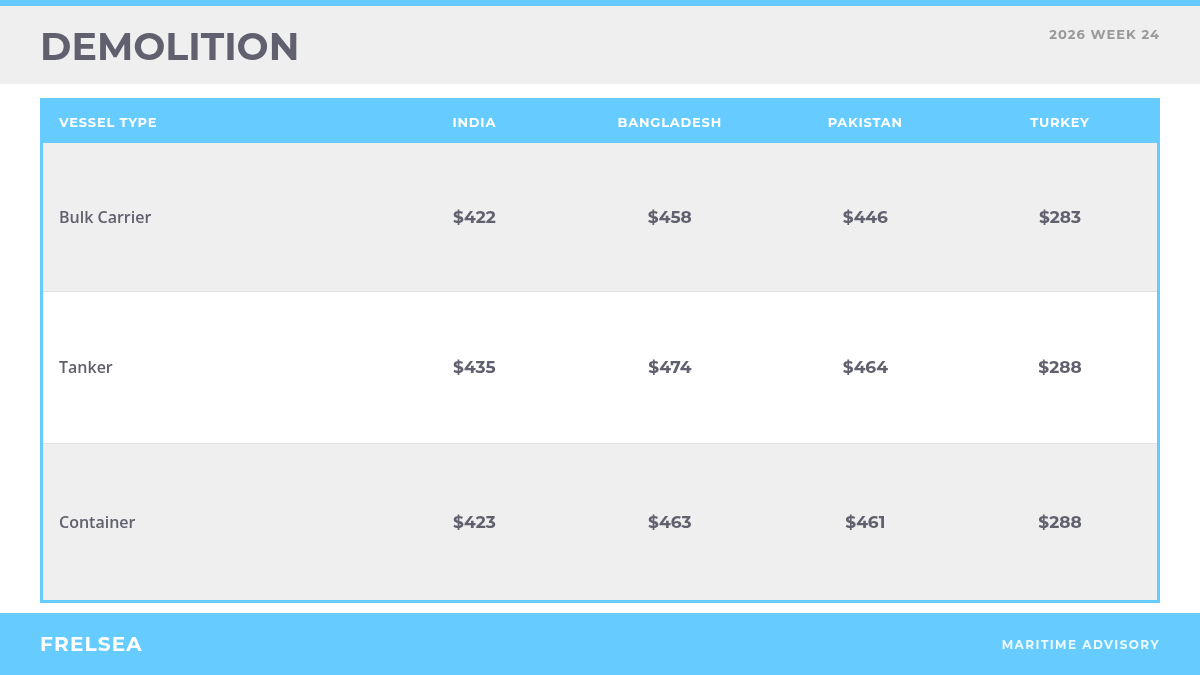
The recycling market was quiet, with the onset of the monsoon weighing on the subcontinent and very few confirmed sales. India remained subdued, constrained by limited tonnage supply and softer steel sentiment, although a steadier rupee offered some support. Bangladesh settled into a routine monsoon pattern, clearing earlier deliveries while breakers awaited the new national budget and the customs duty changes expected within it. Pakistan stood out for an aggressive buying appetite ahead of the seasonal slowdown, with a tonnage shortage and a stable rupee pushing local price indications higher. Turkey stayed uncompetitive against the subcontinent, with persistent price disadvantage keeping volumes thin.
Geopolitics framed sentiment. The Strait of Hormuz reopened to shipping following the Iran-US agreement, ending a closure that had run since late February. The reopening raises the prospect that sanctioned and ageing tonnage previously locked in the Gulf could be released for recycling over time, although the volume and timing remain uncertain and any effect on scrap supply will take months to materialise. The handful of deals that did conclude included a 2001-built crude tanker of around 41,000 light tons sold to India, a 1996-built chemical tanker sold to Alang where its high stainless steel content should command a premium, and a 1982-built bulk carrier sold to Pakistan.